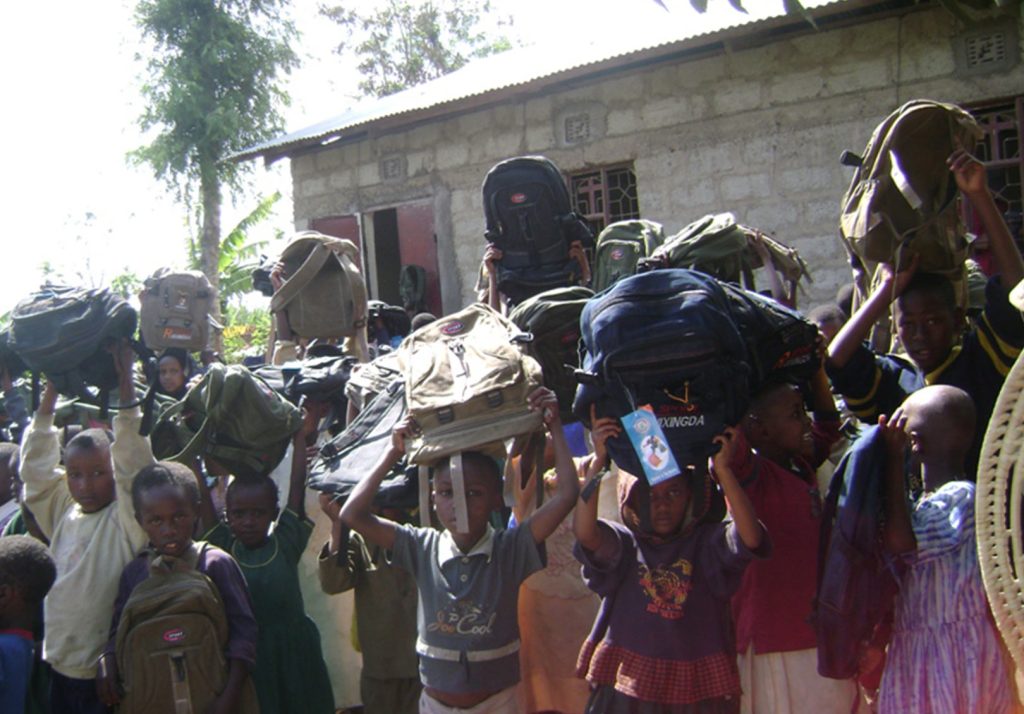
A BACKPACK FOR LOW INCOME FAMILY STUDENT
A simple backpack filled with school supplies is more than stationery — it’s a tool for empowerment, equity, and opportunity. It ensures that poverty doesn’t steal education from children, while simultaneously advancing at least 6+ SDGs in one stroke.
The role of “School Supplies Backpack Support” to Low-Income Family Students
- Access & Participation
- Provides essential learning tools (books, pens, uniforms, geometry sets, etc.) that many families cannot afford.
- Removes financial barriers, helping kids stay enrolled and avoid absenteeism/dropouts.
- Provides essential learning tools (books, pens, uniforms, geometry sets, etc.) that many families cannot afford.
- Equity & Inclusion
- Levels the playing field between children from low-income households and their peers.
- Promotes equal opportunity regardless of socio-economic background.
- Levels the playing field between children from low-income households and their peers.
- Academic Performance
- With the right supplies, students can complete assignments properly and participate actively in class.
- Leads to improved learning outcomes, higher test scores, and reduced repetition rates.
- With the right supplies, students can complete assignments properly and participate actively in class.
- Psychosocial Benefits
- Boosts confidence and self-esteem — children feel “ready for school” like their peers.
- Reduces stigma, social exclusion, and anxiety linked to poverty.
- Boosts confidence and self-esteem — children feel “ready for school” like their peers.
- Family & Community Support
- Relieves pressure on parents struggling to cover education costs.
- Builds goodwill and trust between communities, NGOs, companies, and government partners.
- Relieves pressure on parents struggling to cover education costs.
? Impact on the UN Sustainable Development Goals (SDGs)
Backpack support may look small, but it connects powerfully to multiple SDGs:
- SDG 1: No Poverty → Reduces hidden costs of schooling for low-income families.
- SDG 3: Good Health & Well-Being → Children less stressed, better attendance, reduced child labor exposure.
- SDG 4: Quality Education → Directly enables access, participation, and success in education.
- SDG 5: Gender Equality → Helps keep girls in school, especially where families must choose which child gets supplies.
- SDG 8: Decent Work & Economic Growth → Lays the foundation for future employment and income security through better learning.
- SDG 10: Reduced Inequalities → Bridges gaps between privileged and disadvantaged children.
SDG 17: Partnerships for the Goals → Encourages collaboration (corporate CSR, NGOs, government, local leaders).